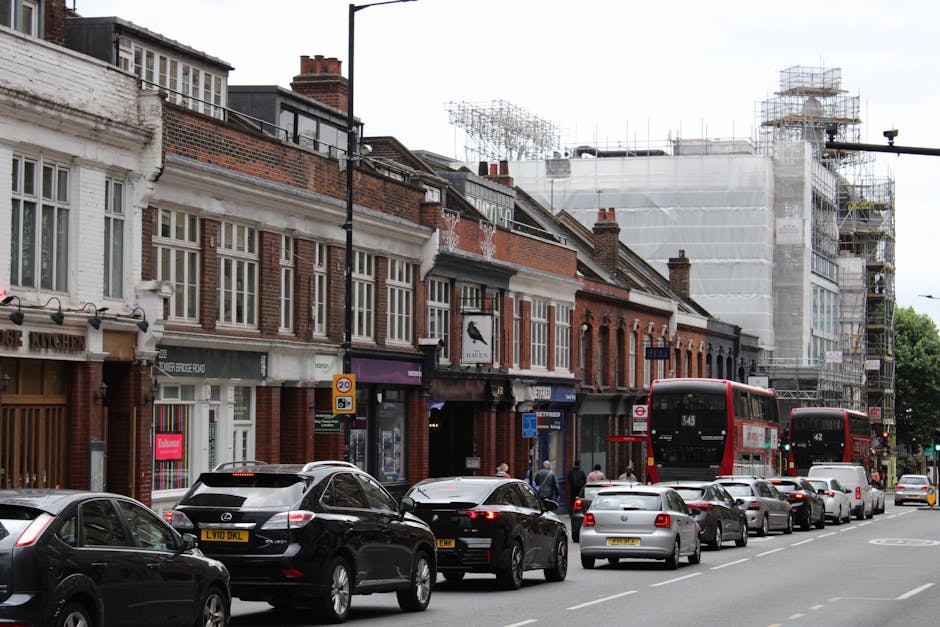
Lewisham Restricted Street Access Common Problems for Vans: What Drivers Need to Know
If you have ever tried to move a van through a tight London street at 8:30 in the morning, you already know the feeling: signs everywhere, buses edging past, parking bays that seem to disappear the second you need them, and a delivery window that suddenly feels far too short. That is exactly why understanding Lewisham restricted street access common problems for vans matters. Whether you are dropping off furniture, managing a flat move, or handling a business relocation, the combination of local restrictions, narrow roads, and real-world time pressure can turn a simple job into a stressful one.
This guide breaks down what causes the issues, how restricted street access affects van work in Lewisham, and what to do before the wheels even turn. You will get practical steps, common mistakes to avoid, and a clear checklist you can actually use. Not fluff. Just the stuff that helps.
Table of Contents
- Contents
- Why Lewisham restricted street access common problems for vans Matters
- How Lewisham restricted street access common problems for vans Works
- Key Benefits and Practical Advantages
- Who This Is For and When It Makes Sense
- Step-by-Step Guidance
- Expert Tips for Better Results
- Common Mistakes to Avoid
- Tools, Resources and Recommendations
- Law, Compliance, Standards, or Best Practice
- Options, Methods, or Comparison Table
- Case Study or Real-World Example
- Practical Checklist
- Conclusion
- Frequently Asked Questions
Contents
- Why Lewisham restricted street access common problems for vans Matters
- How Lewisham restricted street access common problems for vans Works
- Key Benefits and Practical Advantages
- Who This Is For and When It Makes Sense
- Step-by-Step Guidance
- Expert Tips for Better Results
- Common Mistakes to Avoid
- Tools, Resources and Recommendations
- Law, Compliance, Standards, or Best Practice
- Options, Methods, or Comparison Table
- Case Study or Real-World Example
- Practical Checklist
- Conclusion
- Frequently Asked Questions
Why Lewisham restricted street access common problems for vans Matters
Restricted streets are not just a mild inconvenience. For van drivers, they can affect timing, route choice, loading, customer experience, and sometimes even whether a job can be completed safely at all. In Lewisham, that matters because much of the area is a mix of residential roads, busy local centres, controlled parking zones, bus routes, school streets, and narrower side roads where a van may technically fit but still struggle to manoeuvre.
The practical issue is simple: a van is larger, less flexible, and less forgiving than a car. A street that works fine for a hatchback can become awkward once you add height, length, turning radius, and the need to stop for loading. Let's face it, one missed sign or one wrong turn can mean circling for ten minutes, adding stress and fuel burn for no good reason.
There is also a customer side to this. When access is poor, delays are easier to cause and harder to explain. A late arrival can affect a whole moving day, especially if there is a lift booking, building access slot, or a chain of other tasks behind it. For businesses, restricted access can interrupt stock movement and create avoidable downtime. For households, it can mean more carrying distance, more risk of damage, and more frustration than anyone signed up for.
Expert summary: In restricted street areas, the real problem is rarely the restriction itself. It is the combination of poor planning, unclear access information, and the van's limited room for error. The better the pre-check, the calmer the job.
If you are comparing transport options for a move, it can help to review the scope of support available through man and van services or broader removal services, especially when access is tight and the workload needs a flexible approach.
How Lewisham restricted street access common problems for vans Works
Restricted street access is not one single rule. It is a mix of local restrictions and street conditions that affect where, when, and how a van can stop or travel. In practice, van drivers in Lewisham may run into:
- residents-only parking bays
- permit-controlled areas
- time-limited loading spaces
- school keep-clear markings
- bus lanes or traffic filters
- narrow streets with limited passing room
- height restrictions such as low bridges or underpasses
- weight or width limitations on certain roads
- one-way systems that make turning back awkward
- access blocks caused by roadworks or temporary closures
Sometimes the challenge is official restriction. Sometimes it is just geography. A van may need to reverse half a street because there is no safe place to turn. A parked vehicle can block the only clear path. A street may be legal to enter but impossible to use efficiently for loading. You know the type of road: looks straightforward on a map, then becomes a tight squeeze when you are actually there.
Another issue is timing. Even if access is allowed, the best time for van movement may be narrow. School drop-off times, commuter peaks, bin collections, and local delivery traffic can all change how usable a street feels. A route that works at 11 a.m. may be a headache at 4 p.m. That is why planning needs to go beyond postcode-level assumptions.
For larger moves, it may also be wise to combine the van trip with professional packing support through packing and boxes or packing and unpacking services, because a faster load-in and load-out matters even more where stopping space is limited.
Key Benefits and Practical Advantages
At first glance, restricted access sounds like a pure negative. Fair enough. But if you understand it properly, you can actually reduce hassle, save time, and make a move safer. The key benefits come from being prepared rather than improvising on the day.
1. Better route control
Once you know which roads are likely to be awkward, you can plan a route that avoids unnecessary turns, height hazards, and long detours. That can make the whole day less tiring and less likely to go off course.
2. Safer loading and unloading
When you identify where the van can stop before arrival, you reduce awkward carrying distances and the risk of hurried lifting. This is especially useful for heavier items, bulky furniture, or fragile goods.
3. Fewer fines and avoidable delays
Restricted streets often come with parking controls. Even a short mistake can create an issue. Good planning helps minimise the chance of ticketing, towing risk, or a time-consuming repositioning job.
4. Less stress for customers and crews
Honestly, a calm loading plan makes everyone happier. If the van has a clear access point, the move feels controlled instead of chaotic. That matters more than people expect.
5. More accurate scheduling
When access is known in advance, time estimates become more realistic. That is especially useful for anyone coordinating with building management, neighbours, or other service providers.
For moves where timing and access are both tight, services such as same day removals can be useful, but only if the access plan is realistic. Speed helps, but not if the street itself is the bottleneck.
Who This Is For and When It Makes Sense
This topic is relevant to more people than you might think. If a van is involved, restricted access can affect the job. Full stop.
- Home movers: Anyone relocating from a flat, terraced house, maisonette, or shared property in a busy street.
- Students: Moving in or out near stations, university housing, or compact residential streets.
- Landlords and tenants: End-of-tenancy moves often happen quickly and with little margin for error.
- Businesses: Shops, offices, studios, and trades needing efficient loading in busy local streets.
- Furniture buyers and sellers: Heavy items, pick-ups, and drop-offs are more difficult where stopping space is scarce.
- People moving special items: Pianos, large sofas, and delicate equipment need proper access planning.
If your move includes large or awkward items, it may make sense to look at furniture removals, piano removals, or office removals depending on the job type. The access challenge is similar, but the handling risk changes.
In plain English: if your address sits on a narrow road, near a controlled zone, or inside a busy local hub, this guide is for you. If the van can pull up easily and stay put for a while, you will still benefit from the checklist. But your stress levels will probably be lower. Nice problem to have, really.
Step-by-Step Guidance
Here is a straightforward way to deal with restricted street access before it turns into a moving-day headache.
- Check the exact street, not just the area. Restrictions can change from one road to the next, even within a short walk. Do not assume nearby streets have the same rules.
- Identify loading options. Look for lawful stopping space, loading bays, or nearby side streets that make carrying distance manageable.
- Note any time restrictions. Morning school traffic, weekday parking controls, or short loading windows can all matter more than they first seem.
- Measure the vehicle against the route. Think about width, height, turning space, and where the van can safely reverse or turn around.
- Plan for walking distance. If the van cannot park directly outside, estimate the carry and decide whether extra hands or trolleys are needed.
- Tell everyone involved. The customer, driver, and any helpers should know where access is likely to be awkward. Nobody likes surprises with a sofa in the street.
- Add a buffer. Give yourself more time than you think you need. A five-minute delay in a restricted street can become twenty minutes quickly.
- Prepare for a fallback. If the first stopping point is unavailable, have a second option ready.
A small but useful habit: when you arrive, do a short visual sweep before committing the van to a stop. That quick pause can save a lot of back-and-forth. Five seconds of caution beats five minutes of reversing into a bad position. Every time.
Expert Tips for Better Results
These are the kinds of things that make a real difference on the ground, not just in theory.
Use the smallest practical vehicle
If access is tight, a smaller van can often do the job more cleanly than a larger removal truck. Bigger is not always better. Sometimes it is just harder to place.
Pack for faster hand-carrying
In restricted streets, the speed of manual movement matters. Use strong boxes, balanced weights, and sensible item grouping so your team is not constantly adjusting loads at the kerb.
Protect the loading path
Check door thresholds, stair edges, and pavement conditions. If the route between the van and property is uneven, use mats or protection where appropriate. Wet weather can make even short carries awkward. A bit of drizzle and suddenly everything becomes slippery, of course.
Match the service to the access issue
If the issue is only access, a removal van may be enough. If the property, volume, or timing is more complex, look at removals or a more comprehensive setup such as removal truck hire. The point is to solve the problem, not just move it around.
Communicate like a planner, not a guesser
Strong access planning is specific. "Street access might be tight" is not very useful. "Only one short stop point is available and a turn-around may require a side road" is useful.
Keep a calm fallback mindset
There is almost always a workaround, but it may not be the first one you imagined. Stay flexible. That alone prevents half the drama.
Common Mistakes to Avoid
Most access problems are predictable. The trouble is, people keep making the same mistakes. Not because they are careless, usually. More because they are busy.
- Assuming the postcode tells the whole story. It does not. The street itself matters much more.
- Forgetting about height restrictions. A route that looks fine on a map may still have a low bridge or overhead barrier.
- Ignoring temporary road changes. Roadworks, diversions, and local events can change everything for the day.
- Not checking parking rules for loading. A van may need a different approach from a car, even for a short stop.
- Leaving the access check until arrival. By then, the schedule is already under pressure.
- Underestimating carry distance. Fifty metres does not sound far until you are moving a wardrobe or six heavy boxes in and out.
- Choosing the wrong size of vehicle. Too large, and manoeuvring becomes a pain. Too small, and you create extra trips. Neither is great.
- Failing to brief the team. One person expecting kerbside loading while another is prepared for a long carry? That is how the day gets messy.
One of the quietest mistakes is simply assuming everything will be obvious once you arrive. In restricted areas, it often isn't. The signs are there, sure, but they are easy to miss when traffic is moving and you are thinking about the next stop.
Tools, Resources and Recommendations
You do not need a huge toolkit, but a few practical aids can make restricted access much easier to handle.
- Street-level route planning: A map view that lets you inspect turning points, one-way roads, and side streets.
- Vehicle dimensions: Know the van's height, length, and width before planning the route.
- Load lists: A simple inventory helps decide whether you need extra hands or a different vehicle.
- Time buffer plan: Build in a margin for walking distance, parking, or access checks.
- Protective materials: Blankets, straps, and floor protection are helpful where carry routes are short but awkward.
- Storage option: If access issues make the full move too rushed, short-term holding can reduce pressure. Storage can be a sensible bridge between pickup and final delivery.
For budget planning, pricing and quotes is a useful starting point, especially if your access situation may affect vehicle size, time on site, or labour needs. And if you want to understand how jobs are handled in a safer, more structured way, the site's health and safety policy and insurance and safety information are worth reviewing.
Law, Compliance, Standards, or Best Practice
This is an area where careful wording matters. Local access and parking rules can vary, and you should always follow the relevant street signs, permit conditions, and road markings that apply at the time of the move. In London, that usually means paying close attention to local parking controls, loading restrictions, and any temporary notices around suspended bays or roadworks.
For vans, the practical best practice is simple: do not assume that because a stop looks convenient, it is allowed. If the sign says otherwise, the sign wins. Bit annoying sometimes, but that is the reality.
Good operators also tend to work to a few common standards:
- Clear pre-move communication about access constraints
- Safer loading procedures when kerbside space is limited
- Risk awareness around reversing, visibility, and pedestrian movement
- Properly secured loads to reduce movement on short journeys
- Respect for neighbours and local traffic so the job does not create unnecessary disturbance
If you are dealing with a commercial site, the compliance side becomes even more important. Office buildings, retail units, and managed premises often have their own access instructions, time slots, and insurance expectations. In those cases, commercial moves and office relocation services are usually better suited than a purely ad hoc approach.
And for anyone moving a home, the same principles apply. Good planning, lawful stopping, and sensible lifting practices are not optional extras. They are the difference between a job that feels controlled and one that feels like a scramble.
Options, Methods, or Comparison Table
There is no single right way to handle restricted street access. The best option depends on the street, the load, and how much time you have. Here is a simple comparison.
| Method | Best for | Pros | Limits |
|---|---|---|---|
| Small van with careful route planning | Narrow streets, short moves, limited stopping space | More manoeuvrable, easier to position, often less stressful | May require more trips or manual carrying |
| Standard van with pre-arranged access | Typical home moves and furniture collections | Good balance of capacity and efficiency | Still vulnerable to parking or turning issues |
| Removal truck or larger vehicle | Larger jobs with straightforward access | Higher capacity, fewer trips | Can struggle in tight streets and busy residential zones |
| Van plus storage or staged move | Complex access, uncertain timing, multi-day moves | Reduces pressure and keeps the move flexible | Needs extra coordination and may add handling steps |
For a lot of Lewisham streets, the sweet spot is flexibility. A smaller vehicle, smart timing, and a clear unloading plan often outperform a bigger, more impressive-looking setup. Fancy doesn't help if you cannot stop anywhere. That's just how it is.
Case Study or Real-World Example
Here is a realistic example based on the kind of work that comes up often. A tenant is moving out of a first-floor flat on a street with limited daytime parking and a short loading window. The building entrance is set back a little from the road, and the nearest available space is around the corner.
On paper, it looks manageable. In practice, the main risk is not the distance itself but the timing. If the van arrives late, the loading space may already be occupied. If the route is not checked in advance, the driver may spend extra time circling. If the boxes are not packed properly, the carry becomes slower than expected. Suddenly the move is running behind before the first item is even loaded.
The fix is pretty ordinary, which is exactly why it works: the vehicle is sized appropriately, the arrival time is padded slightly, boxes are arranged by priority, and the carry route is mapped before the team starts unloading. The result is calmer, quicker, and easier on everyone involved. No drama, no last-minute panic, and no one standing in the street with a lamp in one hand and a doorstop in the other.
That is the point of handling restricted access properly. It does not eliminate all difficulties. It just stops the small ones from multiplying.
Practical Checklist
Use this before any van job in a restricted street area.
- Confirm the exact street and access conditions.
- Check for parking, loading, or stopping restrictions.
- Look for height limits, one-way streets, or tight turns.
- Identify a legal and practical unloading point.
- Estimate the walking distance from van to property.
- Match the van size to the access and load.
- Allow extra time for delays or repositioning.
- Prepare equipment for safe carrying and load securing.
- Tell the customer or team where the access pinch points are.
- Have a backup plan if the first stopping point is unavailable.
- Review any building instructions for managed properties.
- Keep important documents, keys, and contact details ready.
Quick takeaway: if you know where the van can stop, how long it can stay there, and how far the carry is, you have already solved most of the problem.
Conclusion
Lewisham restricted street access common problems for vans usually come down to the same handful of issues: limited stopping space, narrow roads, loading restrictions, and access that looks easier than it actually is. Once you understand those pressure points, the job becomes much easier to manage. You do not need perfect conditions. You just need a realistic plan.
That is what separates a smooth move from a stressful one. A sensible vehicle choice, a little patience, and proper access checking can save time, reduce damage risk, and keep everyone calmer on the day. And honestly, calmer is underrated.
If you are planning a move, collection, or office transfer in a restricted street, take the time to plan access properly and choose a service that suits the road as well as the load.
Get a free quote today and see how much you can save.
Most importantly, remember this: a difficult street does not mean a difficult move. It just means the move needs a smarter approach. And that is entirely doable.
Frequently Asked Questions
What are the most common Lewisham restricted street access problems for vans?
The most common problems are limited loading space, tight turns, one-way roads, parking controls, height restrictions, and streets that are legal to enter but awkward to use for loading. The issue is usually not one thing; it is the combination.
How do I know if a van can access my street in Lewisham?
Check the street itself, not just the area name. Look at signs, restrictions, turning space, and whether a legal stopping point exists. If the road feels tight for a car, it will likely be more challenging for a van.
Is a smaller van better for restricted streets?
Often, yes. A smaller van is usually easier to manoeuvre, park, and unload in narrow streets. That said, if the job is large enough, making multiple trips could take longer than using a slightly larger vehicle with a safer plan.
Do restricted streets always mean I need a removal truck?
No. In many cases, a smaller van is actually the better choice. Larger vehicles can be harder to place and may struggle with tight corners or limited access. The right size depends on the street and the load.
Can a move still happen if the van cannot park directly outside?
Yes, usually. The key is to plan the carry distance and allow extra time. If the walking route is long or awkward, additional help, better packing, or storage may make the move much easier.
What should I check before booking a van in a restricted area?
Check access, parking rules, loading space, timing restrictions, and whether the property has any special instructions. It also helps to know if there are stairs, lifts, or a long carry from the street.
How do restricted streets affect moving costs?
They can affect cost if they require more time, more labour, a different vehicle, or extra handling. The exact impact depends on the job, so it is better to ask for a quote based on the real access conditions rather than guessing.
Are there extra safety concerns for vans in narrow London streets?
Yes. Reversing, pedestrian movement, visibility, and loading on a busy kerb all need more care. Good planning reduces risk for the driver, the property, and nearby road users.
What if my road has temporary roadworks or a suspended bay?
Then you need to plan around it, because temporary restrictions can change access completely. In those cases, a fallback stopping point or adjusted arrival time may be necessary.
Does packing matter as much as access planning?
Absolutely. Well-packed boxes and organised items reduce handling time, which becomes especially important when access is limited. The faster and safer the carry, the easier the whole job feels.
What type of move is most affected by restricted street access?
Flat moves, furniture pick-ups, student removals, and office relocations are often most affected, mainly because they involve timing, loading, and physical carrying in busy local streets.
Should I choose storage if access is complicated?
Sometimes, yes. If the timing is tight or the access issue makes a same-day move too stressful, short-term storage can break the job into manageable parts. It is not always needed, but it can be a very sensible fallback.